How many grafts do I need?
Tap the picture that looks most like your hair today.
Visual guide only. Your doctor confirms the final number after examining you in person.

Natural hairlines and real density with FUE, Sapphire and DHI techniques — for men and women — planned from your photos and carried out in one visit to Istanbul, Türkiye.
Hair loss is personal, and so is the plan. We look at your photos — including the donor area at the back of the head — and prepare a preliminary estimate of the grafts you need and the technique that suits your hair.
On the day of the procedure the doctor examines you in person, confirms the number of grafts, and designs your new hairline with you before anything begins. A full medical check is done first, for your safety.
Grafts are taken one by one from the donor area and placed where hair is thinning. No linear scar.
FUE with fine sapphire blades to open the channels, for precise, natural placement.
Grafts are placed with an implanter pen, allowing close control of angle and direction.
Planned for the patterns of female hair loss, often without shaving the whole head.
Fills patchy areas or builds a full beard and moustache.
Single hairs placed one by one for natural, well-shaped brows.
Our VIP driver meets you at the airport and takes you to your hotel.
Medical check and blood tests, then the doctor confirms your graft count and draws the hairline with you. The procedure is done under local anaesthesia. You receive your medication and aftercare kit.
A control at the clinic and your first wash, with clear instructions for the coming weeks. Then the VIP car takes you to the airport.
Your stay can be longer if you wish, or if the doctor advises it. A second session is only needed in rare cases, to add density later.
Private car between the airport, your hotel and the clinic.
Comfortable accommodation arranged for the whole stay.
One advisor follows your case from the first message to the last check-up.
Every consultation is explained clearly, word for word.
The medicines prescribed after your treatment are given to you free.
Our team is reachable day and night while you are in Istanbul.
Someone from our team can accompany you to appointments.
We check in after you fly home: weeks 1, 2 and 3, then at 1–2 months.
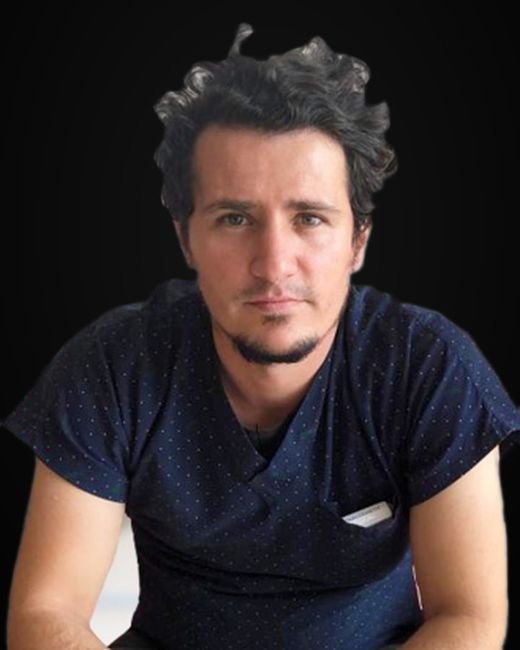
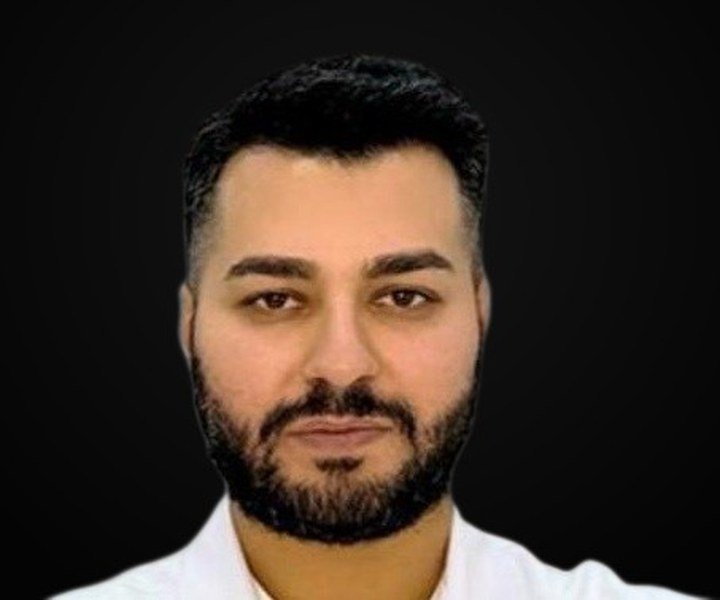
The dentists and surgeons who examine you and carry out your treatment at our partner clinic in Istanbul.

Hair Transplantation Surgeon

Hair Transplantation Surgeon
Short visual guides to the questions our patients ask most.
Tap the picture that looks most like your hair today.
Visual guide only. Your doctor confirms the final number after examining you in person.
All three move your own hair follicles from the back of the head to the thinning area. They differ in how the follicles are placed.
| FUE | Sapphire FUE | DHI | |
|---|---|---|---|
| How grafts are taken | One by one with a micro punch | One by one with a micro punch | One by one with a micro punch |
| How channels are opened | Steel blade | Fine sapphire blade | No channels first: a pen opens and places in one step |
| Shaving | Usually needed | Usually needed | Sometimes possible without shaving the whole head |
| Best for | Most types of hair loss | Natural density over larger areas | Hairline design and dense packing |
There is no single best technique. The doctor recommends the one that suits your hair type and the area to treat.
What to expect, month by month.
Procedure and first wash in Istanbul, then home.
Redness and small scabs, which fall off naturally.
Transplanted hairs shed. This is normal and expected.
New hair starts to grow and gets stronger.
The final result is visible.
PRP uses your own blood and is often added to support the scalp after a transplant.
A small amount of blood is taken from your arm.
A centrifuge separates the platelet-rich plasma.
The plasma is prepared for treatment.
It is injected into the scalp with fine needles.
PRP is an add-on, not a replacement for a transplant. Ask your doctor whether it suits you.
Two newer treatments patients often ask about. They aim to support the hair you still have.
Regenerative cells are taken from your own body, usually from a small sample of fat or a few hair follicles from the back of the head, then prepared and injected into the thinning area.
To support weak follicles and improve the scalp around them.
Exosomes are tiny particles that cells release to send signals to each other. Exosome products are prepared in a laboratory, usually from stem cells.
To carry growth signals to the hair follicles and support thicker, stronger hair.
| PRP | Stem cells | Exosomes | |
|---|---|---|---|
| Comes from | Your own blood | Your own fat or hair follicles | Prepared in a laboratory from cells |
| How it is applied | Injections into the scalp | Injections into the scalp | Injections or after microneedling |
| Sessions | Usually several | Often a single session | Usually several |
| Research so far | The most studied of the three | Early | The earliest |
None of these replaces a transplant. Your doctor tells you whether one of them suits your hair.
Losing 50–100 hairs a day is normal. If you see your hairline moving back or your crown thinning, it is worth a check.
It depends on the area to cover and your donor area. We give you a preliminary estimate from your photos; the doctor confirms the final number when examining you.
FUE, Sapphire and DHI all give natural results in the right hands. The doctor recommends the one that suits your hair type and the areas to treat.
The procedure is done under local anaesthesia. Afterwards some tightness and swelling for a few days is normal, and your medication is given to you.
Many patients return to office work within about a week. Your aftercare guide explains what to avoid and for how long.
No — please do not use minoxidil after your hair transplant unless the clinic tells you otherwise. Follow the aftercare guide you receive.
Yes. Women’s hair loss follows different patterns, and the plan is adapted to it.
Please tell us about every illness and medication before booking. The clinic does a full medical check before the procedure.
Leave your details and a medical advisor who speaks your language will contact you on WhatsApp to prepare your plan.